CoinGecko
Any coin. USD, EUR, and friends. Sparkline at 5m, 1h, or 1d. Price rounded or not — your call.
32 × 64 · RGB · LAN
Two thousand and forty-eight pixels.
A market. A fight. A room.
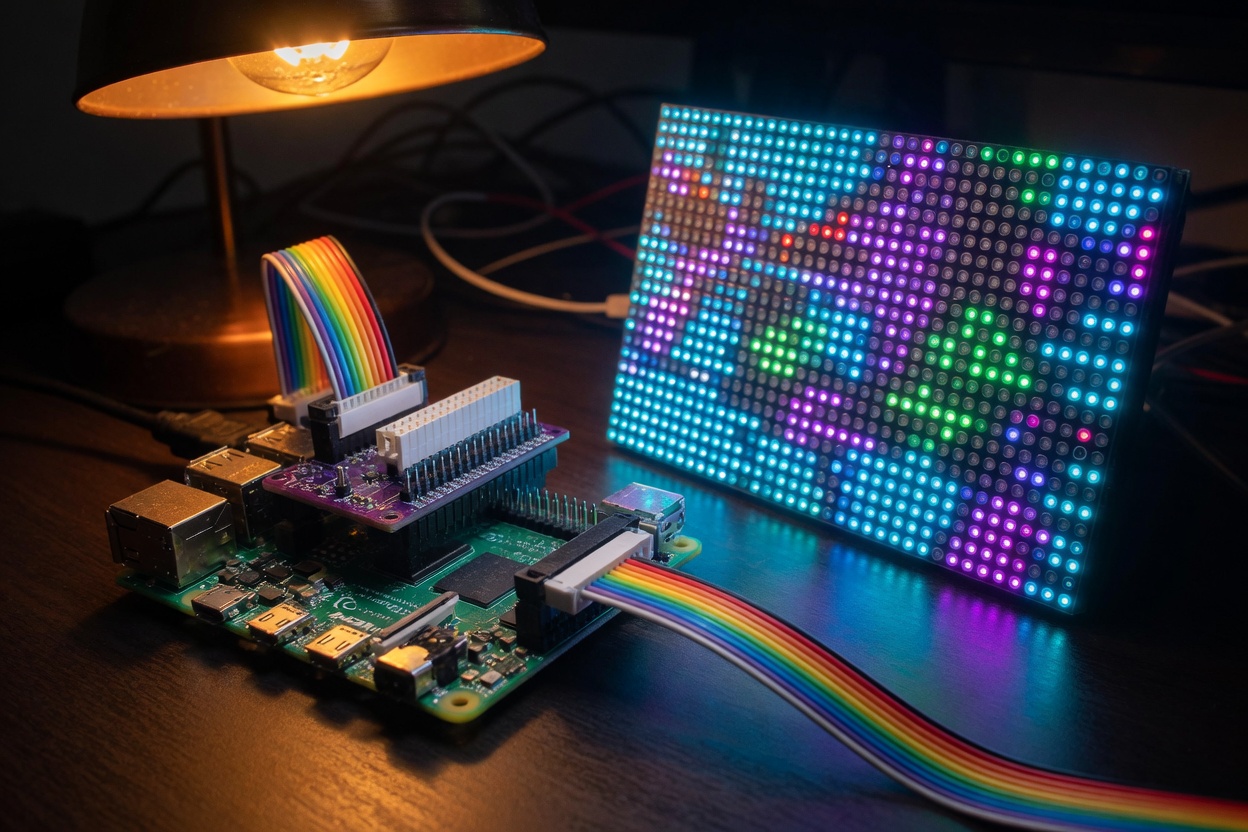
A 32×64 RGB matrix. Adafruit HAT. Isolated CPU core for the refresh thread. Uncapped frame rate so rainfall, pong, and stick fights never pulse.
It lives on a Raspberry Pi Zero 2 W, in Docker, on the LAN. You configure it from a browser. The panel never goes black — failed fetches keep the last good frame.
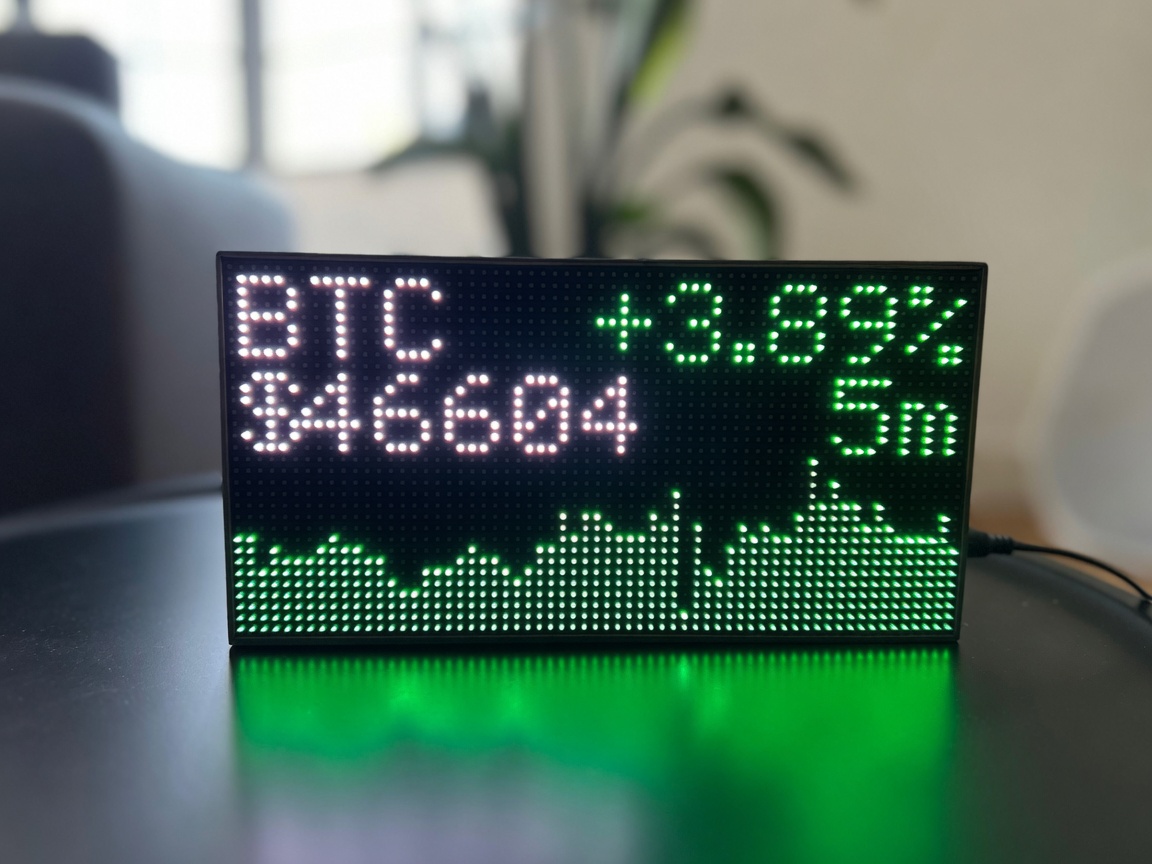
Any coin. USD, EUR, and friends. Sparkline at 5m, 1h, or 1d. Price rounded or not — your call.
Equities, gold, indices. Ticker color follows the US session: open, pre, after, closed.
Whole units. Today’s change. A 64-column sparkline from the machine on your LAN.
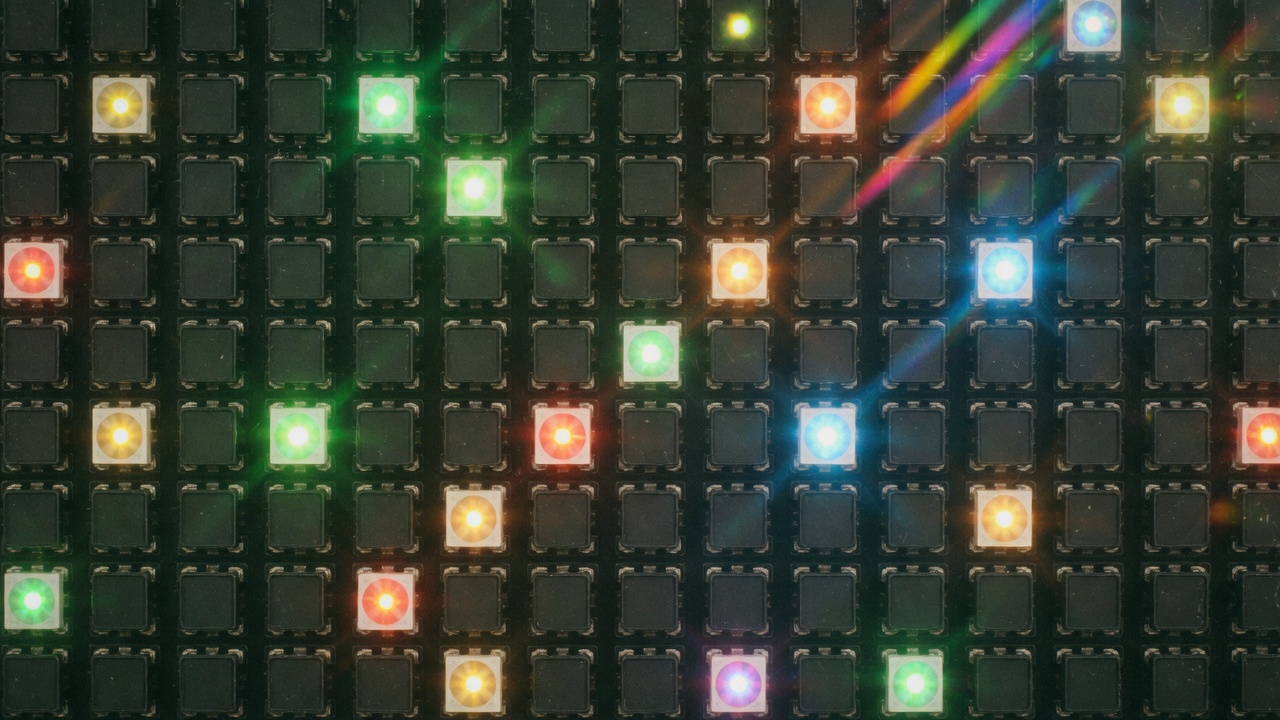
Pages slide, fall, or get wrecked. Fireworks freeze the current frame. Two stick figures fight on the sparkline. Two paddles rally until the glyphs explode.
Press a cue. The preview plays it. On the real panel it lasts eight to ten seconds, then the page redraws — destruction is overlay-only.
The web UI is a 64×32 preview, a rotation you can drag, an inspector for every field, brightness that dims the canvas live, FinD under the stage, and a Pi strip that can restart either container. Save only when something changed. Classic and Original sit in the header as archives of earlier interfaces.